
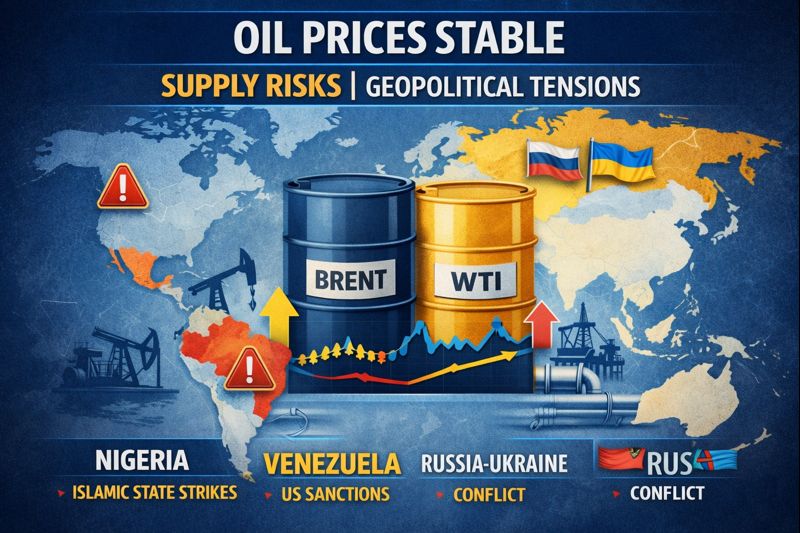
Global oil prices remained largely unchanged on Friday as investors carefully evaluated potential supply risks arising from geopolitical developments. Trading volumes were light due to the post-Christmas holiday period, limiting sharp market movements.
Brent and WTI Crude Prices Show Marginal Gains
By mid-day trading:
- Brent crude rose slightly to $62.36 per barrel
- U.S. West Texas Intermediate (WTI) increased to $58.54 per barrel
Despite the modest uptick, oil markets continue to face pressure as they head toward their largest annual decline since 2020.
Oil on Track for Sharpest Annual Decline Since 2020
Analysts say the oil market remains weighed down by rising global production, particularly from OPEC+ members and non-OPEC producers. The increase in supply has raised concerns of a market surplus in 2026, keeping prices under control despite geopolitical uncertainty.
US Airstrikes in Nigeria Have Limited Market Impact
The United States recently carried out airstrikes against Islamic State militants in Nigeria’s Sokoto state, coordinated with the Nigerian government.
Why Oil Markets Stayed Calm
- The strikes did not target oil pipelines or export terminals
- Nigeria’s oil production infrastructure is mainly located in the south
- Traders avoided aggressive positions due to thin holiday liquidity
Energy analysts said the operation posed no immediate threat to oil supply, leading investors to stay cautious.
US Steps Up Economic Pressure on Venezuelan Oil
Washington also increased economic pressure on Venezuela’s oil sector, signaling a continued effort to restrict crude exports through sanctions and financial controls rather than military action.
Market observers noted that Venezuelan supply remains constrained, but the impact has already been largely priced in by traders.
Low Holiday Trading Keeps Market Activity Subdued
Analysts said year-end holidays have reduced trading volumes, keeping oil price movements limited.
According to market experts, supply-side developments, rather than demand trends, are currently the main drivers of price direction.
Russia-Ukraine Developments Remain Key Focus
Investors are also closely watching the Russia-Ukraine peace process, as any progress could have a significant impact on global oil markets.
Why It Matters
- A peace agreement could lead to easing or removal of sanctions on Russian oil
- This may increase global crude supply, adding further pressure on prices
Ukrainian President Volodymyr Zelenskiy said key decisions could be made before the New Year and expressed hope for an upcoming meeting with US President Donald Trump. Reports suggest the two leaders may meet soon, though official confirmation is pending.
Meanwhile, Russian President Vladimir Putin reportedly indicated openness to territorial negotiations, raising cautious optimism among investors.
Conclusion
Oil prices remain range-bound as markets balance geopolitical risks, rising global supply, and low holiday trading activity. While global tensions continue to shape sentiment, analysts say production levels and sanctions policy will play a larger role in determining oil prices in the months ahead.