A Relationship Rooted in History and Trust
The partnership between India and Morocco is built on centuries of cultural exchange, trust, and shared civilizational values. From historical maritime trade routes connecting the Indian Ocean, Red Sea, and Maghreb, Indian merchants introduced textiles, spices, and artisanal products to Moroccan markets, while Moroccan scholars and traders enriched intellectual and commercial life across the Islamic world.
In modern times, India’s support for Morocco during anti-colonial movements and its advocacy for sovereignty and dignity in the Global South have further strengthened this enduring relationship. Leaders like Jawaharlal Nehru laid the foundation for cooperation among newly independent nations, a principle that continues to guide India’s engagement with Africa and the Arab world.
Industrial Collaboration for Mutual Growth
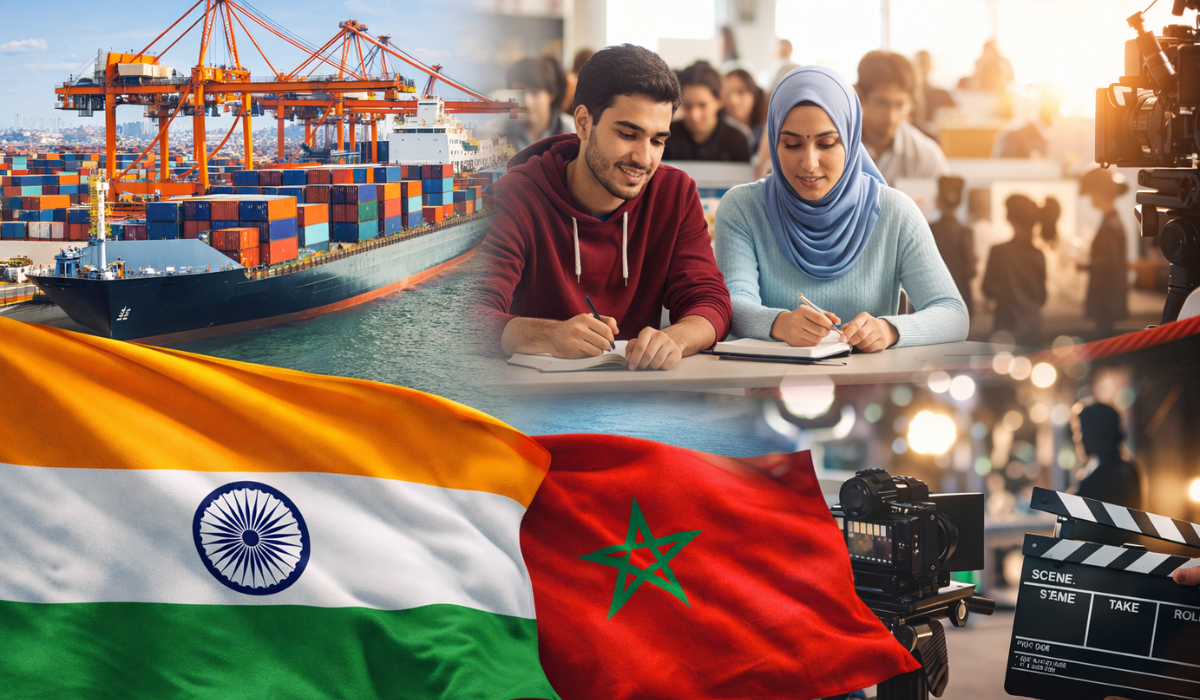
India’s industrial expertise, especially in scaling manufacturing and building domestic capabilities, presents valuable opportunities for Morocco. Indian companies are already active across Africa in sectors such as automotive components, pharmaceuticals, chemicals, IT services, and renewable energy.
Morocco’s industrial zones, modern ports, and trade access to Europe make it an ideal location for Indian firms seeking regional manufacturing hubs. For instance, India’s pharmaceutical sector supplies affordable medicines across Africa, and collaboration with Morocco could strengthen local production, healthcare resilience, and export potential.
Similarly, India’s experience in automotive manufacturing ecosystems aligns with Morocco’s position as Africa’s leading car exporter, offering scope for partnerships in technology, supply chains, and skill development.
Education: Building Human Capital
Education remains central to India–Morocco cooperation. Moroccan students have pursued higher education in India in medicine, engineering, IT, and management, benefiting from high-quality and affordable institutions.
Initiatives like India’s Indian Technical and Economic Cooperation (ITEC) program have trained thousands of African professionals, including Moroccans, in public administration, technology, and development planning.
Future collaborations between Moroccan universities and Indian institutions such as IITs, medical colleges, and film academies can further strengthen Morocco’s human capital, foster research, and support vocational excellence.
Cinema and Cultural Exchange
Morocco’s landscapes, including deserts and historic cities, have attracted international film productions, while India’s Bollywood industry remains a major cultural force globally.
Indian filmmakers increasingly shoot in Morocco, while Moroccan creatives contribute to international projects. A structured India–Morocco collaboration in cinema can promote joint productions, technical training, film education, and digital content partnerships, using cinema as a tool of soft power and cultural diplomacy.
Trust: The Cornerstone of Partnership
India’s approach is consistent: cooperation without political conditions, development without coercion, and investment that prioritizes local capacity. This philosophy aligns with Morocco’s development vision under King Mohammed VI, emphasizing education, infrastructure, and South–South cooperation.
As Morocco embarks on a transformative decade with major infrastructure projects, industrial growth, and global cultural visibility, the India–Morocco partnership offers a strategic opportunity for shared, sustainable growth.
This alliance is not based on dependence, but on mutual growth, strengthened by history, trust, and a common vision for the prosperity of both nations and the wider Global South.